Buy for a task you can name
A new espresso station can attract an impressive number of small purchases. Before adding an accessory, complete the sentence: “This helps me do…” If the answer is only “make the setup look complete,” move it to a later list. Begin with what your machine includes and learn what is inconvenient in actual use.
This guide proposes a buying order, not a set of mandatory products. The right list changes with your machine, baskets, usual drinks and available storage.
Check the box before replacing its contents
Read the current product listing and manual for the exact model. You may already receive a tamper, milk pitcher, baskets or cleaning tools. Those parts give you a starting routine and a reference for deciding what, if anything, needs changing. The Bambino support hub is an example of the manufacturer documentation worth saving.
Keep original accessories until you know whether a replacement works reliably. Confirm fit by model and dimensions. A portafilter or basket that resembles yours in a photograph is not necessarily compatible.
For the next part of this decision, read What belongs in a beginner espresso budget?.
Put measurement and cleanup early
If you want to compare recipes, a scale and a written note can help organize the process. Check that the scale fits beneath the cup, is suitable for the environment and can be used without obstructing controls. Decide where you will put a hot or wet portafilter while working.
Cleanup deserves a place in the budget too. Have the manufacturer-approved care products and an appropriate cloth available. This is less exciting than decorative hardware, but a station that is easy to reset is more pleasant to use every day.
Before you settle on a purchase, see How to dial in espresso without changing everything at once.
Add milk tools only for milk drinks
If you make cappuccinos or lattes, check whether a suitable pitcher is supplied and whether it fits your handling preferences. Think about how much milk you normally prepare rather than choosing a pitcher for its appearance. Allow room to move it around the wand and set it down safely.
If you drink espresso without milk, skip that purchase for now. Similarly, a collection of specialty cups is optional. Start with vessels that fit your equipment and the drinks you enjoy, then decide whether different shapes or sizes would improve your routine.
Give upgrades a waiting period
Use a short list with three columns: problem, proposed tool and cost. Leave an upgrade there long enough to check whether a technique change or rearranged station solves the same problem. Avoid ordering several new tools together, because you will struggle to identify which change mattered.
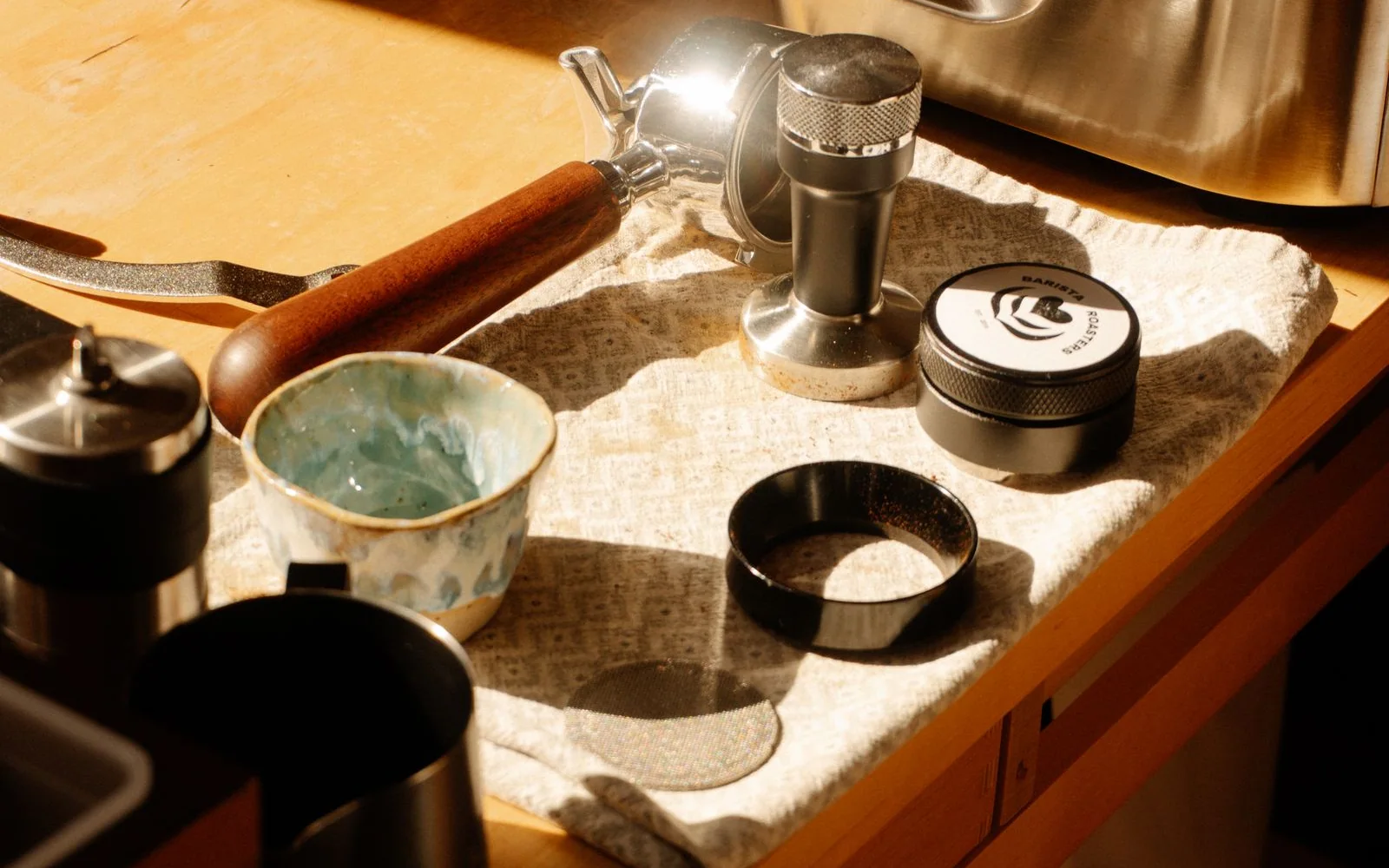
A bottomless portafilter, distribution tool, organizer or premium tamper may suit a later preference. None needs to be a first-day purchase merely because it appears in coffee videos. Buy in an order that keeps the station understandable, usable and within the original budget.
Sort a sample accessory basket
Suppose your cart contains a premium tamper, a scale, three cups, a knock box and a decorative shelf. Beside each item, write the immediate task it enables. If the machine already includes a suitable tamper, that upgrade moves to “later.” If existing cups fit, the new cups are a preference purchase. If a scale is central to the recipe you want to learn, check its fit before keeping it.
There is nothing wrong with buying attractive objects for enjoyment. The point is to distinguish that preference from an essential operating cost. Set separate totals for “needed to start” and “would enjoy owning.” You can then make an intentional choice without allowing every optional accessory to become a supposedly necessary part of beginner espresso.
Sources & further reading
Manufacturer information and reference material consulted for this guide. Model specifications and care instructions can change; check your exact model’s manual.