Look beyond the word “burr”
Buying a grinder becomes easier when you define the job first. For espresso, you want to control the coffee you put in the basket and make repeatable adjustments. For a household switching between espresso and other methods, you also need a convenient way to return to earlier settings. The label “burr grinder” alone does not explain that workflow.
This is a specification-based shopping guide. It does not assign taste scores or claim that we have measured the performance of the grinders mentioned.
Encore ESP or Smart Grinder Pro?
Encore ESP has an espresso-focused range at settings 1–20 and a broader filter range at 21–40. Its pulse or on/off operation suits a manual dosing routine. Smart Grinder Pro offers 60 settings, a display and programmable grinding time. That is a control difference, not evidence of better taste.
If you weigh beans and run a single-dose routine, compare how the Encore ESP fits that process. If you want to repeat a timed setting, investigate Smart Grinder Pro, then still weigh output: time is not dose weight. Both manufacturer pages listed $199.95 at our November 5 check; colour, stock and offers can differ.
Measure bean-loading and cleaning access as well as the closed body. The listed Encore ESP size is 13 × 15 × 34 cm (W × D × H). Breville lists Smart Grinder Pro at 8.5 × 6.3 × 15.3 inches (W × D × H). Keep each manufacturer’s stated order visible, and confirm any measurement that determines a tight fit.
Check the exact adjustment system
Look for the manufacturer’s explanation of espresso adjustment. How is a setting changed? Is the usable range easy to identify? Can the grinder be adjusted as directed while coffee is present? A manual is more useful here than a retailer’s list of superlatives.
For a concrete example, the Encore ESP divides its numbered settings into a finer-adjustment espresso range and a broader filter range. That does not make it the answer for every buyer; it shows the kind of model-specific information worth checking before ordering.
For the next part of this decision, read How to dial in espresso without changing everything at once.
Choose a workflow you will repeat
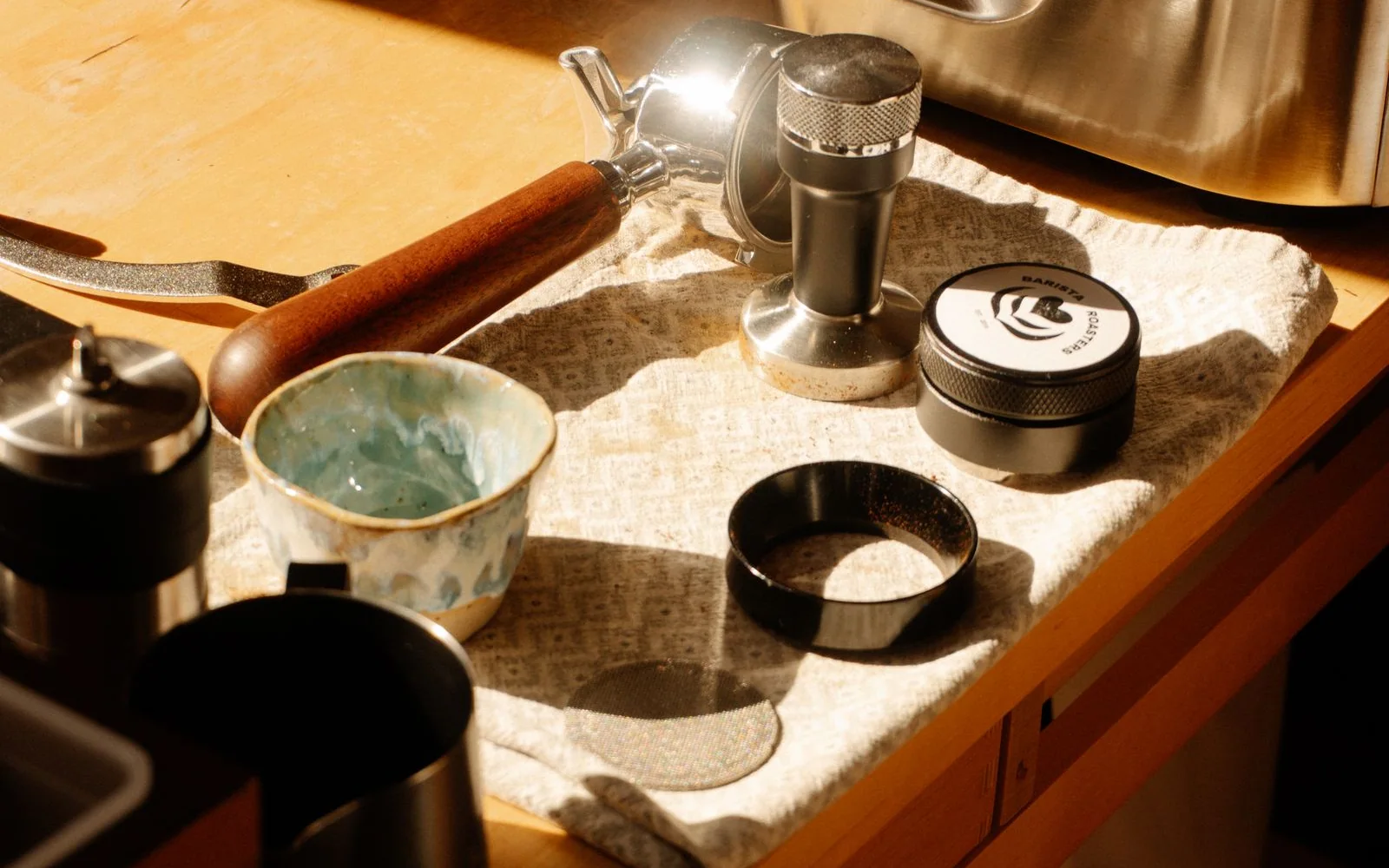
Imagine making a drink while you are tired. Will you weigh beans before grinding, collect grounds in a cup, or grind into a portafilter? Check what supports or cups are supplied, how much room you need beneath the outlet, and whether your chosen basket size works with the accessories.
If two people use different beans or brew methods, discuss how settings will be recorded. A notebook beside the station can be more useful than paying for a feature neither person understands. Avoid assuming a timer is a direct measurement of the amount of ground coffee.
Before you settle on a purchase, see A small coffee station layout that leaves room to cook.
Include space, noise and care
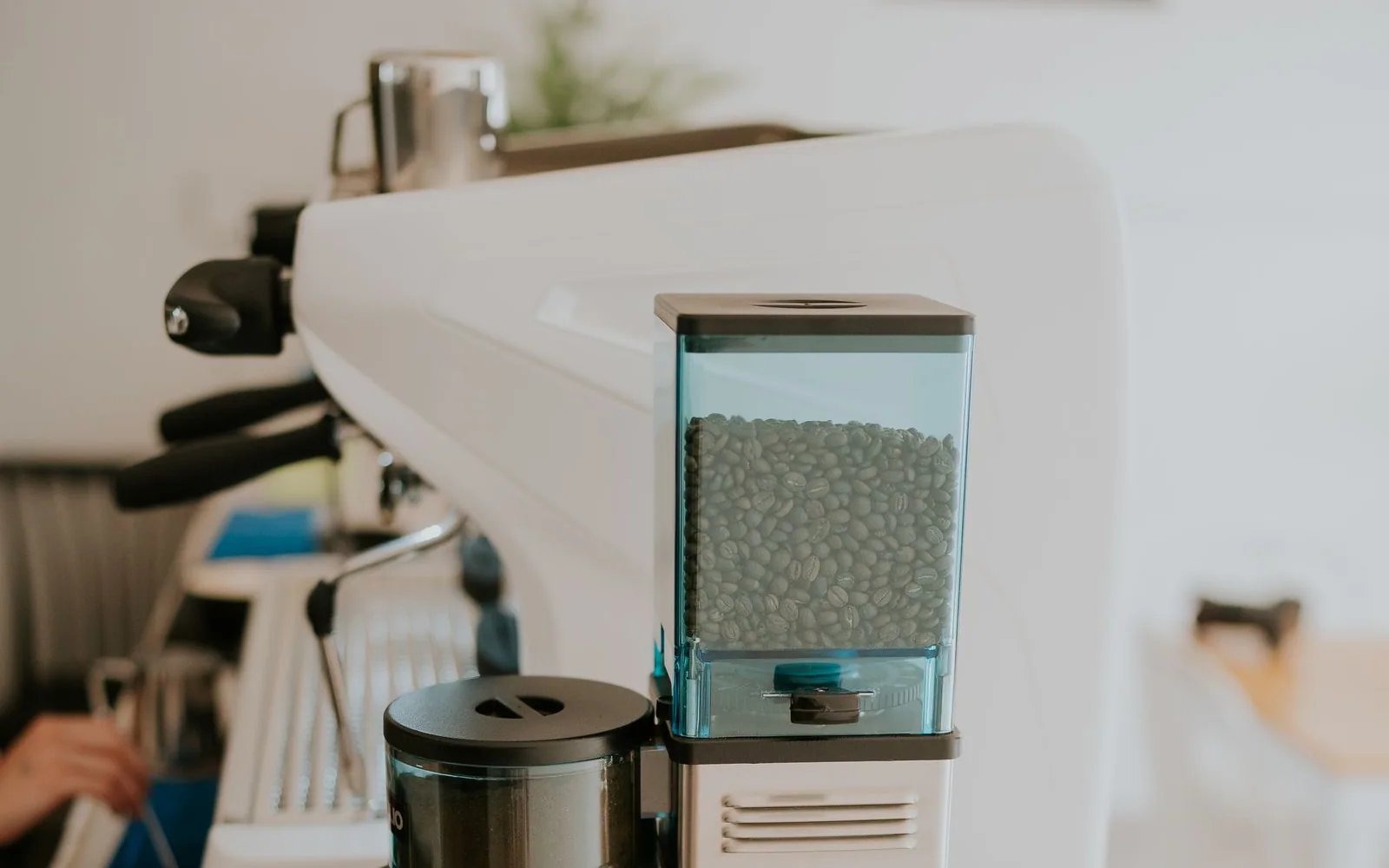
Measure grinder height beneath cupboards, including the access needed to add beans and remove parts for cleaning. Think about the location of bedrooms and the time you brew. Published noise descriptions are not a substitute for comparable measurements, so treat unqualified “quiet” claims cautiously.
Read the maintenance instructions and check access to replacement parts. Ask how comfortable you are removing the parts the manufacturer identifies as user-serviceable. Do not buy a grinder on the assumption that you can modify it later to achieve an unsupported use.
Use a four-column shortlist
For each candidate, record espresso adjustment, daily handling, counter fit and ownership costs. Add the exact model number so you do not accidentally compare a newer variant with an older review. Keep purchase price separate from accessories and future consumables.
Choose the grinder that meets your actual recipe and routine within budget. If two options look close, favor the one whose operation and maintenance you understand. A clear process is more valuable to a beginner than a long list of features that will never be used.
Two useful household scenarios
Consider two hypothetical owners. Maya makes one espresso each morning and wants to leave the grinder at one setting. Sam shares a kitchen with someone making filter coffee and expects to switch methods. Maya should focus on an understandable espresso adjustment and a straightforward dosing routine. Sam should also examine how settings are recorded and how practical the changeover is.
Neither person needs to buy every feature. Write your own version of these scenarios in two sentences, including who uses the equipment and how often the method changes. Then compare the candidates against that actual routine. If a grinder is excellent at a task your household never performs, leave that advantage out of the decision rather than allowing it to justify a higher price.
Check the exact models
Uncommissioned links to the manufacturer’s product pages. Confirm the selected model, current price and bundle before ordering.
Settings 1–20 target espresso; 21–40 cover filter methods.
60 grind settings and programmable grinding time; weigh the output.
Sources & further reading
Manufacturer information and reference material consulted for this guide. Model specifications and care instructions can change; check your exact model’s manual.