Use the exact manual as the checklist
Two espresso machines with similar names can have different cleaning procedures. Start with the model number on your machine and download its current manufacturer instructions. Save the manual somewhere you can find it when a reminder appears. Do not assume that a sequence for the Bambino Plus applies to the standard Bambino.
This article explains how to organize care. It is not a replacement for the chemical quantities, button sequences, temperatures or safety instructions provided for your machine.
Separate the jobs on paper
Routine cleaning addresses the coffee and milk residues associated with use. Descaling addresses mineral buildup in the water system using the process specified by the manufacturer. Treat them as separate checklist entries rather than assuming that completing one automatically completes the other.
Read what your own manual calls for and which supplies it names. Avoid improvising a descaling mixture or substituting a household chemical because a social post describes it as cheaper. The right product and sequence are model-dependent, and mixing cleaning products is unnecessary.
For the next part of this decision, read How to dial in espresso without changing everything at once.
Make daily care easy to finish
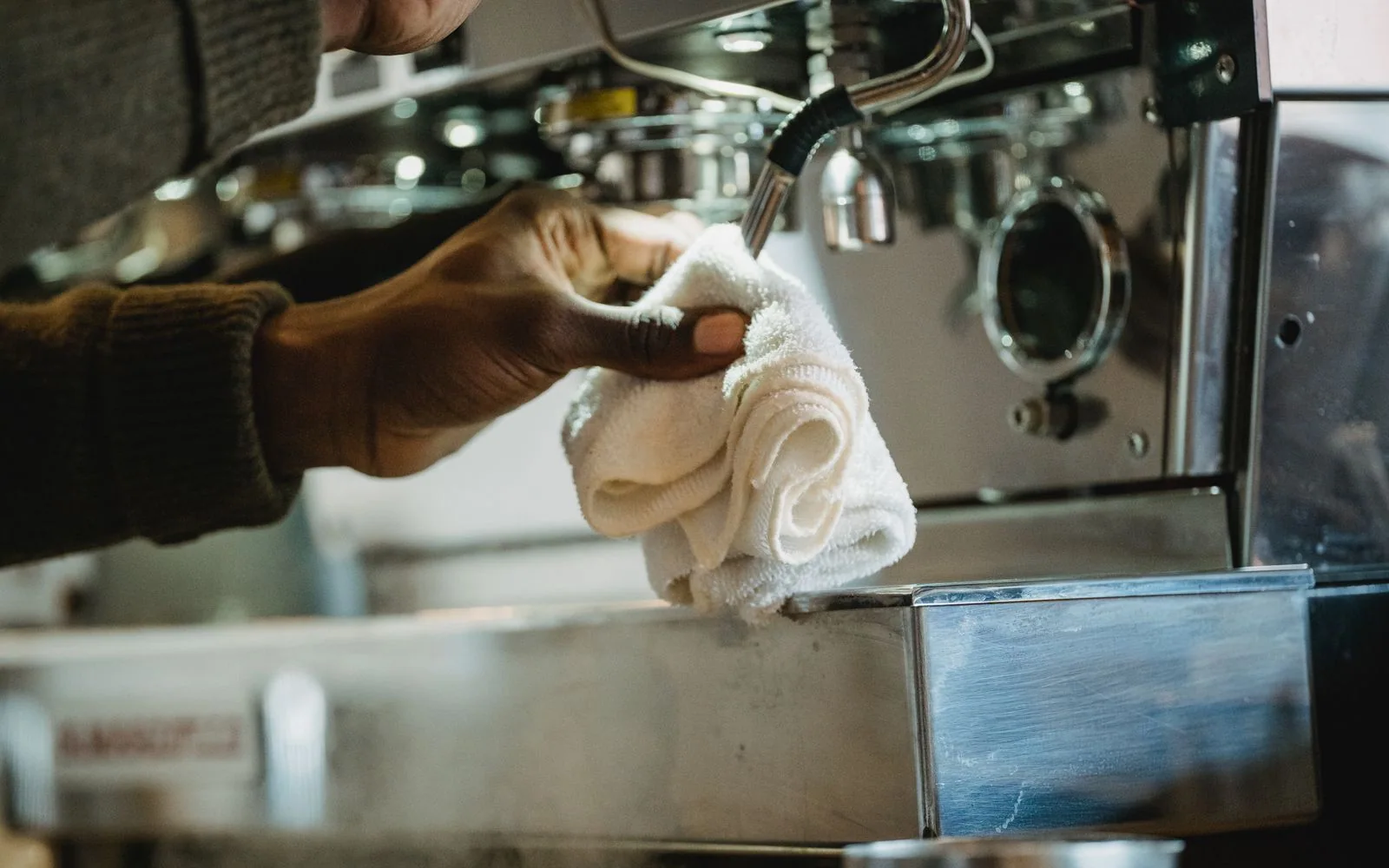
Look at the care steps associated with the drink you actually make. If you use the steam wand, have the recommended cleaning items ready before beginning so that cleanup does not become something you postpone. Check whether trays or baskets need cooling before handling.
Assign each removable part a place to dry without blocking the kitchen. A clear drying space makes it easier to reassemble equipment correctly. Do not store damp components in a closed accessory box simply to make the counter look tidy.
Before you settle on a purchase, see Before you buy an espresso machine on Amazon: a listing checklist.
Record completion, not an invented interval
Use the manufacturer’s prompts and guidance, including any water-related settings, rather than copying a fixed schedule from another household. Add the date of a completed cleaning or descaling procedure to a note. If a reminder returns unexpectedly, the note can help you explain the sequence to support.
Keep replacement filters and chemicals labeled so that another person in the household can identify them. Store care products as directed and away from food preparation. Retain any package instructions that explain suitability, dilution or handling.
Know when to stop troubleshooting
If the machine leaks, fails to complete a procedure or shows a persistent error, follow the manual’s troubleshooting section and contact manufacturer support. Repeating random button combinations or running extra chemical cycles can make the problem harder to diagnose.
Before replacing a machine, check the warranty and identify the evidence support requests. A simple care log and the exact model number are useful. Most of all, build a routine that you can complete consistently; ownership includes the reset after the drink, not only the enjoyable brewing step.
Create a two-line care record
Your record can be as small as two entries: one for the completed cleaning process and another for completed descaling, each with the date and exact product used. Add an unusual symptom only when there is one. Store the link to the matching manual beside the record so that a reminder does not send you back to a general web search.
For a shared station, agree who updates the note. If a reminder appears after someone else has performed care, the record lets you establish what was actually done instead of guessing. Do not change the interval just to keep the two entries synchronized. The purpose is to distinguish the procedures and communicate clearly, not to invent a fixed schedule independent of the manufacturer’s guidance.
Sources & further reading
Manufacturer information and reference material consulted for this guide. Model specifications and care instructions can change; check your exact model’s manual.